


Artificial or real flowers? An honest comparison
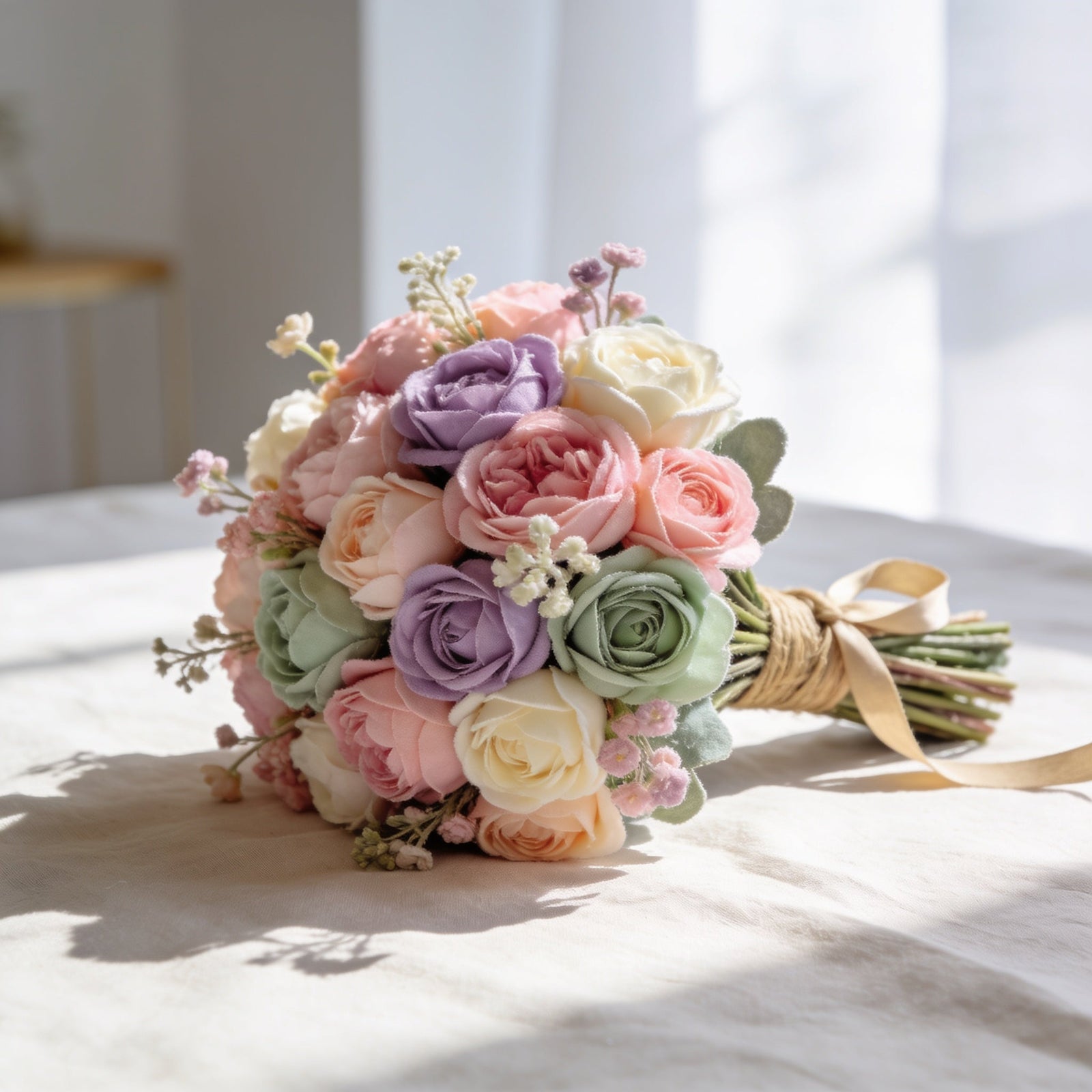
Bloomli sells artificial flowers. Even so, this comparison is meant honestly: there are situations in which real flowers are clearly the better choice. Both sides stand side by side here so you can decide for yourself.
How long they last
Real flowers last seven to fourteen days with good care. Chrysanthemums and carnations manage longer, tulips and peonies considerably less; for tulips, five to seven days is realistic. Care means changing the water every two to three days, recutting the stems roughly every three days and removing wilted leaves.
Artificial flowers do not wilt and stay in shape for a long time with normal indoor use. The limit is not wilting but dust and sunlight: constant direct sun bleaches colours over time.
Cost
A bunch of cut flowers costs money every time. Artificial flowers cost more once and nothing afterwards.
For context: in Germany, around 8.6 billion euros a year are spent on flowers and plants, a good third of it on cut flowers. Per head, that comes to about 108 euros a year.
When switching pays off still depends entirely on how often you would buy again. If you pick up fresh flowers every fortnight, that comes to around 26 bouquets a year and you are ahead quickly. If you buy a bouquet twice a year, artificial flowers save you little. Blanket savings promises are dubious, so you will not find any here.
Appearance
Quality has improved markedly. Good real-touch blooms have a matt surface, visible veining and a bendable stem. At normal distance and in photos they are convincing.
Up close, with the bloom in your hand, an attentive eye will still spot the difference. Anyone who claims otherwise is overstating it.
Scent
There is nothing to debate here: artificial flowers have no scent. If the smell of a bunch of lilac or roses is part of it for you, real flowers are the right choice.
Care
Real flowers need fresh water, freshly cut stems and wilted leaves removed: on average, a little attention every two to three days.
Artificial flowers need dusting every two to four weeks with a soft brush, a microfibre cloth or a hairdryer on the cool setting. Twice a year, a more thorough clean with lukewarm water, then leave to air-dry. That is all.
Allergies
Cut flowers bring pollen into the home, which is why the German professional association of ENT doctors simply advises those affected to put the bouquet back outside. The highest pollen load comes from chrysanthemums and sunflowers, plus gerberas; lilies add strongly clinging pollen and a heavy scent. Chamomile, marguerites and asters belong to the same family as chrysanthemums.
Artificial flowers release no pollen of their own and therefore add no pollen source to the room. Dust does gather on their leaves, though. With a house dust allergy, regular wiping matters.
Environment, and why the answer is not as clear-cut as it sounds
Short and honest: artificial flowers are made of plastic. Bloomli’s goods are manufactured in China and brought into the EU through a dealer network in the Netherlands. They are not biodegradable and are hard to recycle.
What surprises many people: ecologically, cut flowers are by no means automatically the clean option. A study by Cranfield University compared roses from Dutch greenhouses with roses from Kenya, and found that the Dutch production of 12,000 roses causes around six times as much CO₂ as the same quantity from Kenya. The reason is the energy needed to heat and light the greenhouses, which outweighs the air freight.
A more recent life-cycle assessment points in the same direction: a bouquet of greenhouse roses from the Netherlands causes around 27 kg of CO₂ equivalent there, a bouquet flown in from Kenya around 9.3 kg, which is about two thirds less.
None of this means that cut flowers are bad, nor that artificial flowers are good. It only means this: anyone who takes sustainability seriously has to look beyond the material in both cases.
The decisive point with artificial flowers is how long they are used. The longer an artificial flower is actually kept, the more the material input is put into perspective. One that is thrown out after a year comes off worse than a seasonal bouquet from the field next door. There is no robust life-cycle assessment comparing both sides over their full period of use, which is why Bloomli does not present figures here that do not exist.
When artificial flowers make sense
- Dark rooms, hallways and windowless corners where real plants die.
- Places nobody looks after regularly, such as stairwells or waiting areas.
- Celebrations where the decoration should be ready well in advance.
- Decoration that stays in place for months.
- Households with a pollen allergy.
- Households with cats: lilies, tulips and daffodils are toxic to cats, and the pollen alone is enough.
- When you want a particular bloom regardless of the season.
When real flowers are the better choice
- When the scent is part of it.
- As a small present or gift where the very transience is the point.
- When you enjoy watching them change and open over the days.
- For a single occasion where you would not reuse anything afterwards.
- When you can buy local and seasonal: field-grown tulips in spring come off considerably better than roses in winter.
Both works too
Many people combine the two: a permanent base of artificial plants for corners and shelves, plus the occasional fresh bouquet on the dining table. That keeps the room green all the time without giving up scent and freshness entirely.
Read on
If you want to know what Bloomli looks for in material and workmanship, that is on the page Why Bloomli. Answers on care, delivery time and material can be found under Frequently asked questions. The Journal shows where artificial flowers make a difference in everyday life. The range starts with the bouquets and potted plants.
Matching products in the shop

Deluxe Decorative Heart on Stand, Red-Burgundy-White, Height approx. 15 cm
€29,95 incl. VAT

Jungle Duo: Monstera (Monstera deliciosa) and Alocasia Polly with Vibes Fold Green Cover Pots
€70,95 incl. VAT

Colourful Leaf Duo: Croton (Codiaeum variegatum) and Caladium
€52,95 incl. VAT

Colourful Windowsill Duo: Wax Plant (Hoya) and Tradescantia with Yellow and Red Cover Pots
€56,95 incl. VAT

Green Windowsill Duo: UFO Plant (Pilea) and Philodendron Birkin with elho Jazz Round White Cover Pots
€56,95 incl. VAT

Windowsill Orchid Duo Orange and Lilac (Phalaenopsis) with Yellow and Lilac Cover Pots
€78,95 incl. VAT

Pastel Windowsill Duo: Polka Dot Begonia (Begonia maculata) and Ice Water (Pilea cadierei) with Pink and Lilac Cover Pots
€56,95 incl. VAT

Glass Vase "Artic" Ivory, Height approx. 35 cm
€82,95 incl. VAT

Green Duo: Fiddle-Leaf Fig (Ficus lyrata) and Pothos (Epipremnum aureum) with Ocean Atlantic Blue Cover Pots
€60,95 incl. VAT

Trailing Plant Duo: Ivy (Hedera helix) and Tradescantia with Green and Lilac Cover Pots
€56,95 incl. VAT

Eagle Candle Holder, Height approx. 46 cm, Multicoloured
€114,95 incl. VAT

Elephant Candle Holder in Polyresin, Height approx. 35 cm, Pink/Green
€48,95 incl. VAT